Amid hundreds of deaths each year, here’s how Houston is spending opioid settlement dollars
Researchers urge City of Houston officials to consider sustainability as future opioid settlement funds become available.

More than 600 Harris County residents died of an opioid overdose in 2023, an average of 11 individuals each week.
That same year, the city of Houston obtained the first round of opioid abatement funds it is set to receive over the next two decades as part of a statewide legal settlement with pharmaceutical companies and distributors.
Of the $4.4 million the city has received to date, more than $500,000 has been spent on naloxone, opioid-simulating goggles, embroidered sweaters, computer gear, legal settlements and personnel costs, among other things, according to purchase data reviewed by the Houston Landing through a public records request, the only way to find out how the funds have been spent.
There is no state requirement that the city report back to the state how it is using funds or that it create an online report. Starting this year, however, cities will be asked to fill out a survey regarding their use of the funds.
“There’s literal lives lost that led to these settlements being made,” said J. Douglas Thornton, a pharmacist researcher at the University of Houston and the region’s representative on a state working group that oversees distribution of part of the settlement funds. “We should at least be familiar with what they’re using it on.”
Katharine Harris, a drug policy fellow at Rice University’s Baker Institute for Public Policy who is tracking the use of opioid settlement funds, agreed.
“Given that that we can expect, most likely, more settlements related to the overdose crisis in the future, it’s really important in these early years to establish these best practices for not only how to spend the money, but also how to report on that spending for the public who has been harmed by this crisis and has a right to know how these dollars are being spent,” she said.
Many medical professionals also call for greater transparency, citing concerns over how governments used tobacco settlement funds to plug some budget holes.
“What we don’t want is for decisions to be made behind closed doors without anybody really understanding what’s happening,” said Joshua Sharfstein, a physician and vice-dean at the Johns Hopkins Bloomberg School of Public Health, who helped draft national guidelines for using opioid litigation funds. “These are funds that are for the benefit of the community and people should understand how they’re being used so that they can have input.”

According to a Landing review of expenditure data through late March, the city spent a little more than $523,000 in opioid settlement funds since the beginning of the 2024 fiscal year, according to detailed budget documents.
Among the purchases and future commitments:
- $215,000 for two temporary staff members; one of them a payroll administrator and the other an epidemiologist.
- Nearly $38,000 on salaries and benefits for full-time staff including a customer service clerk and another unspecified role.
- 30 emergency naloxone kits totaling $6,046.80.
- A kit which simulates the impairment caused by opioid-use at $10,536.60. It includes goggles, hand/wrist weights set, a backpack, a DVD and other educational materials.
- 250 imprinted promotional bags from Staples, costing $1,545.
- A $3,000 annual software subscription with an interactive curriculum on topics ranging from mental health to substance use.
- Computer gear totaling $6,508.72
- $930.82 worth of embroidered cardigans.
- $57,200 on unspecified drugs and medication.
- A contract worth up to $90,000 to monitor wastewater for opioid levels.
- $195,000 from the fund was approved for unspecified use through Amazon.com
Houston also spent $132,746 on legal settlements to the Houston Recovery Center, University of Texas at San Antonio and Baylor College of Medicine.
The three had been vendors for the city’s FRONTLINES program to equip and train firefighters with naloxone, and treat people through the Houston Recovery Center. Due to an administrative oversight, the city fell behind in paying the vendors; the settlements were to pay for work already completed.
Researchers urge city officials to consider sustainability as future opioid settlement funds become available.
“It’s not unlimited and it will run out eventually, and we need to be very judicious with how we use it. And we need to make sure that how we are using it is evidence-based,” said Tyler Varisco, researcher at the University of Houston College of Pharmacy.
As for how to use them moving forward, Harris said city officials should consider treatment, recovery, harm reduction and prevention.
“If we want to reduce this problem for future generations, that’s really where prevention comes in,” Harris said. “Prevention is going to require investment in infrastructure, affordable housing, and the kinds of things that people need to be able to live a life that has meaning and opportunity.”
Carolyn Schneider, seven years removed from her own heroin addiction, agreed. As a recovery coach at Santa Maria Hostel, a north Houston organization focused on women and families with substance abuse problems, she said the city should consider the people impacted by opioid use when deciding how to use the settlement funds.
“They’re helping people, not just numbers,” Schneider said.
The Santa Maria Hostel is where Schneider went for treatment after she was arrested while three months pregnant with her third child. That’s when she had a spiritual awakening, she said.
“Everything I went through, it was for a reason, right?” she added. “It was for a purpose, because now I can use that lived experience to encourage somebody who’s going through the same thing, who’s battling with those same emotions and feelings and who can’t see a way out.”
The hostel relies mostly on public money, but recent federal funding cuts have affected some of its programs.
“It’s life and death. For many of the individuals that we work with, without their medications, their overdose and relapse risk is very significant,” said Vaughan Gilmore, a substance use counselor and chief executive at Santa Maria. “We’re talking about children losing their moms to addiction.”

The hostel has set its sights on additional opioid settlement funds being administered by the Opioid Abatement Council, a working group within the Texas comptroller’s office.
“The goal that we have is to make sure it’s accessible to the people who are doing the work in the communities that are actually trying to help people’s lives that are suffering from this overdose crisis,” Thornton said, noting that recovery housing is one of the panel’s priorities as they look to fund innovative projects.
There also are ongoing efforts to expand access to treatment.
“One of the biggest determinants of whether or not you stay in any treatment, not just treatment for opioid use disorder, is the convenience of care,“ Varisco said. “A lot of pharmacies will not fill prescriptions for patients that live more than a couple of miles from their pharmacy. And if your pharmacy is 40 miles from your house, what are the odds that you’re going to continue using that pharmacy?”
A Harris County Public Health report last year found limited or no treatment facilities in areas that had high rates of healthcare facility visits that involved the use of a substance.
As for naloxone, which reverses opioid overdoses, a Baker Institute report authored by Harris found that of 155 retail pharmacies across Houston as of 2023, 17 percent do not carry it.
Methadone, a medication that treats opioid use disorder, is not available in retail or community pharmacies. It’s only available through select facilities that obtain licensing through the state. There are only 14 state-licensed opioid treatment programs in Harris County that provide methadone.
Additionally, a 2023 survey of 524 Texas pharmacies found only 67 percent stocked buprenorphine, another medication that treats opioid use disorder. The reason for that, Varisco said, is that pharmacies are more hesitant to prescribe that medication due to regulations requiring notification to the U.S. Drug Enforcement Administration.
While Varisco has created guidelines for pharmacies with those concerns, he also is working on increasing the availability of buprenorphine. He would like to use opioid settlement funds to start a patient navigator program to help residents find a pharmacy that has their medication.
“This medication helps people live very normal lives,” Varisco said. “I guarantee you, you know somebody who’s using this medication and has used it for years to manage their chronic disease or opioid use disorder.
This story was originally published by the Houston Landing
Autor(a)

Artículos relacionados
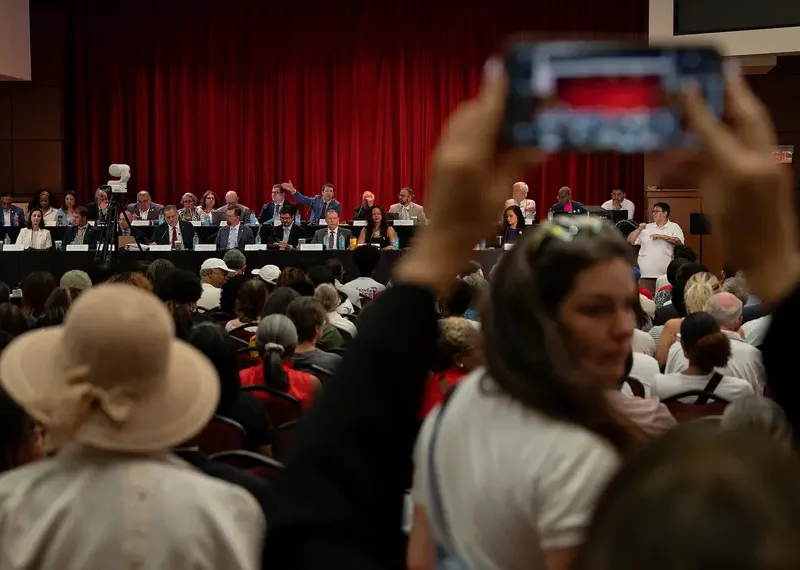
Texas House redistricting committee’s Houston hearing draws criticism over absence of maps
Democratic members slammed the process, questioning why hearings were happening before maps were available for review.
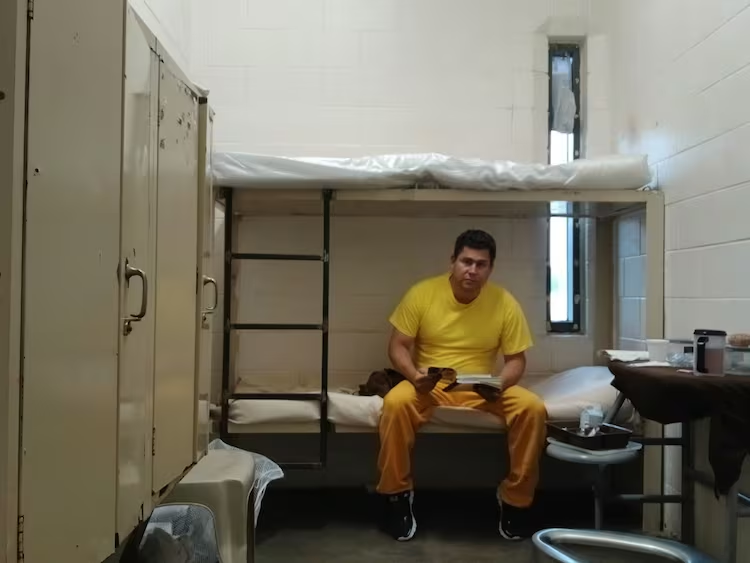
Hispanic journalist’s detention exposes risks facing small independent media
Mario Guevara’s case presents particularly complex elements at the intersection of immigration law, press freedom, and due process.

The child tax credit is changing. Here’s what it means for your family
The credit rises to $2,200, but its new requirements will shut out an estimated 2.7 million American children.